
An independent journalist arrested while investigating a small West Virginia town’s troubled sewer system says the experience transformed his understanding of warnings he had heard since arriving in the state — not about dangerous mountain hollers, but about what can happen when someone challenges entrenched local institutions.
Michael Bowman was arrested April 15 while reporting at Worthington Town Hall in Marion County and charged with two counts of obstructing an officer. Both charges were later dropped.
Bowman has since filed a federal civil rights lawsuit against the Town of Worthington, Mayor Deborah Heflin, Marion County, Sheriff Roger Cunningham, Officer Gump and other defendants. The lawsuit alleges violations of his constitutional rights arising from the encounter and arrest. The allegations have not been adjudicated.
The confrontation grew out of Bowman’s reporting on Worthington’s long-running sewer problems. He went to Town Hall seeking answers from local officials about the crisis and government money intended to address it.
Video shows an increasingly contentious exchange as Bowman questions officials about the sewer system and what he viewed as inconsistencies in what he had previously been told.
“You question anything in WV, you’re being argumentative,” Bowman said while recounting the encounter.
At one point, Bowman attempted to reset the conversation.
“I did not come here to make you out to be the villain,” he said. “Unfortunately, you’re falling right into that role. So if we could just reset. Hell, I’ll even turn my camera off.”
Police were called.
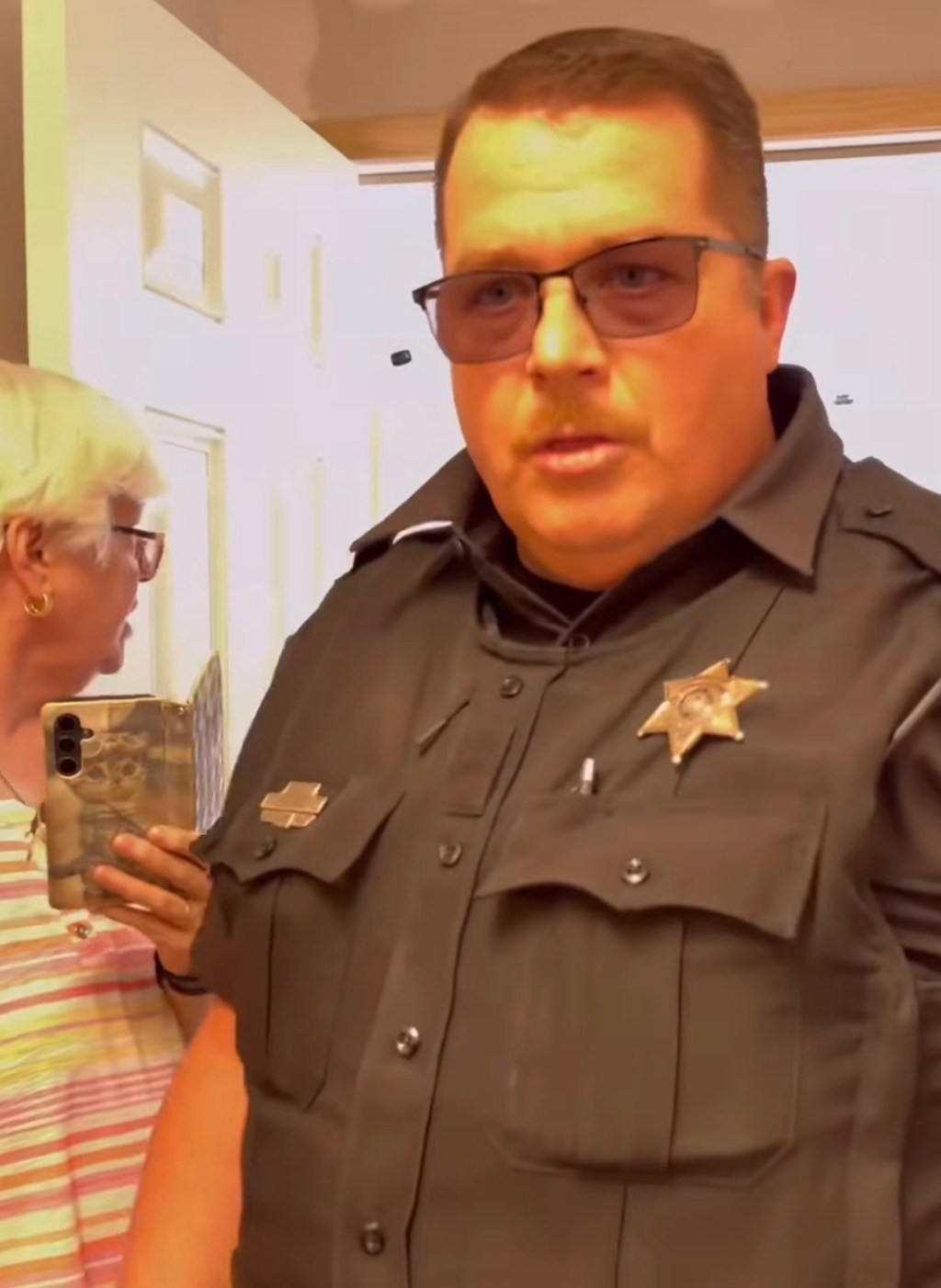
Officer Gump was among those who responded. Bowman questioned the officers’ authority to demand his identification and asked them to give him space. Gump then told Bowman he was under arrest for obstruction.
Prosecutors eventually dropped both charges.
Bowman says the experience fundamentally changed how he understood West Virginia and the warnings he had received after arriving in the state about a year earlier.
At first, people back home warned him about familiar Appalachian stereotypes — the outsider who drives into the wrong holler and encounters hostility. Bowman said he quickly concluded those fears were largely exaggerated.
Then he began hearing a different warning, this time from West Virginians themselves.
Bowman said locals spoke to him privately as he began probing failing institutions and government problems that residents believed had persisted for years. He came to believe he was encountering what he describes as a culture of corruption and a deeply rooted good-old-boy system built on loyalty, maintained through fear and protected through retaliation.
“You can conceptually talk about something like corruption until you’re blue in the face,” Bowman said. “But until you experience it, you just won’t get it.”
Bowman said accounts of government intimidation had remained abstract until he found himself arrested.
He alleges that during his detention an elected sheriff with decades in law enforcement told him, “We don’t tolerate that shit around here, boy,” and said the patch “wears a little differently in Marion County.”
Bowman also alleges he was subjected to an excessive bond, intimidating jail conditions and officers eager for him to make a mistake that could be interpreted as resistance.
The allegations remain disputed and have not been established as findings of fact.
Bowman said the experience gave him a new perspective on West Virginians who believe they have been mistreated by government but lack an audience, recordings, financial resources or the ability to challenge powerful institutions.
His account has striking parallels more than 1,500 miles away in the mountains of Far West Texas.
David Flash, founder of Texas Reporter and publisher of Big Bend Reporter, has spent years covering local government in Jeff Davis County, a sparsely populated county in the Davis Mountains.
Flash alleges county officials responded to critical reporting with escalating efforts to intimidate him and interfere with his work.
His news organization began publishing investigative stories about Jeff Davis County officials in 2023. What followed, according to his federal lawsuit, was a series of criminal investigations, restrictions on his access to government, arrests and prosecutions involving officials he was covering.
Flash was arrested in April 2024 on harassment and terroristic threat warrants. The terroristic threat charge was later declined for prosecution.
In June 2025, Flash went to a Jeff Davis County Commissioners Court meeting while working as a journalist. He was detained, handcuffed and charged with disorderly conduct. That charge was dismissed the following month. The incident was later documented by the U.S. Press Freedom Tracker.
Flash filed a federal civil rights lawsuit in January against Jeff Davis County and numerous officials, alleging retaliation for constitutionally protected speech, unlawful arrests and a broader effort to interfere with his reporting.
His case has since survived significant efforts to dismiss it.
U.S. District Judge David Counts allowed several claims against former Jeff Davis County Judge Curtis Evans to proceed, including First Amendment retaliation, Fourth Amendment false arrest, civil rights conspiracy and state law claims. Claims involving Sheriff Victor Lopez and Jeff Davis County also survived in part.
Those rulings do not establish that the defendants violated the law. They mean Flash alleged sufficient facts for those portions of his case to continue.
The parallels between Bowman and Flash raise a broader issue about the vulnerability of independent journalists working in small communities.
Both scrutinized rural local governments. Both say hostility intensified as they continued asking questions. Both were arrested. Charges central to their disputes were later dropped or declined. Both say criminal enforcement became a means of intimidation, and both ultimately turned to federal courts.
Independent journalists in small communities also operate without the institutional protection of a major newspaper or television network. The people they investigate may work alongside or have longstanding relationships with the officials who police, prosecute and govern the same small community.
The First Amendment, however, does not become weaker with population.
A journalist questioning officials in Worthington has the same constitutional protections as one questioning officials in Washington. A reporter entering a courthouse or commissioners court in Fort Davis does not surrender those protections because the government is small and everybody knows everybody.
Bowman thanked Marion County Prosecutor Jeffrey Freeman for dropping his charges, saying that was the appropriate outcome. But he said dismissal did not erase what happened.
“What I went through that day was for me a life-changing and life-altering event,” Bowman said. “But to West Virginians, it was just another single line item in a long book of abusive moments that, unlike mine, were never recorded, never publicized and never challenged.”
For Bowman, the experience he once understood only conceptually had become personal.
For Flash, the same thing had happened in the mountains of West Texas.
Both recorded and documented what happened.
Now their allegations are matters for federal courts.

