
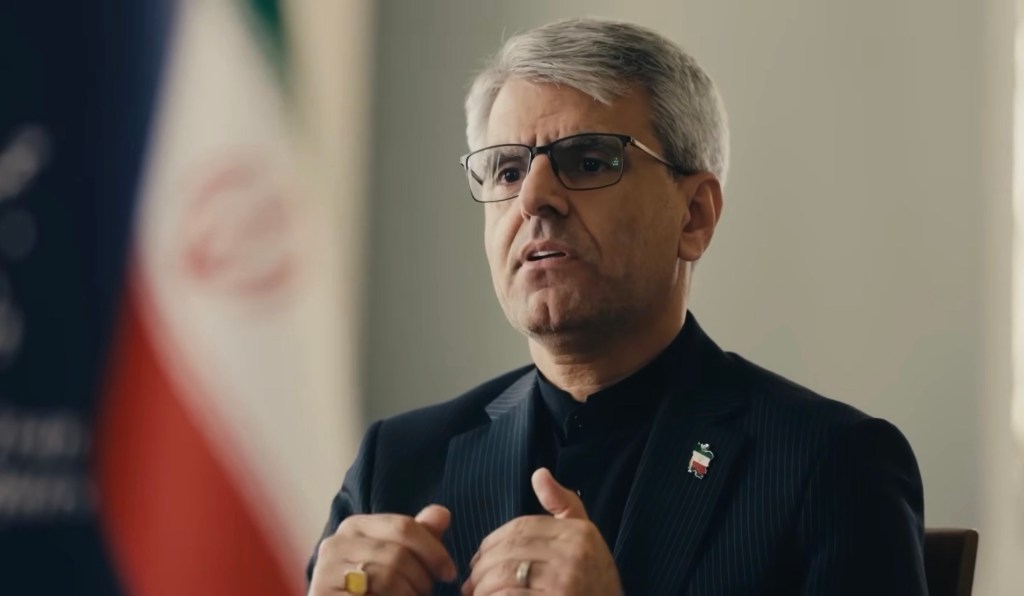
A new interview published by Vice News offers a rare, direct look at how Iranian officials are publicly framing their position on war, nuclear policy and relations with the United States as tensions with Israel and Washington continue to escalate.
In the interview, “Iran Speaks Out: Inside Tehran’s Response to Trump, Israel, and War with Shane Smith,” Vice News founder and journalist Shane Smith spoke with Iranian Foreign Ministry spokesperson Esmail Baghaei, who defended Iran’s nuclear program, blamed the United States for deteriorating relations and warned that expanding conflict in the Middle East risks triggering wider regional instability.
Baghaei repeatedly argued that Iran has pursued diplomacy while being unfairly targeted through sanctions, military pressure and what he described as a coordinated campaign involving the United States and Israel.
“No one really can control the boundaries of war,” Baghaei said in the interview. “War is like a fire. If you do not extinguish it, it will simply expand.”
Iran Defends Nuclear Program
Much of the conversation centered on Iran’s nuclear ambitions and longstanding disputes with the United States over uranium enrichment.
Baghaei defended Iran’s nuclear program as peaceful and legal under the Treaty on the Non-Proliferation of Nuclear Weapons, known as the NPT, rejecting allegations that Iran seeks nuclear weapons.
He argued that Iran’s nuclear infrastructure began with U.S. support decades ago through the American “Atoms for Peace” initiative and said nuclear power remains essential to Iran’s energy and industrial needs despite the country’s large oil and gas reserves.
“Atomic energy doesn’t have only power or electricity uses,” Baghaei said, citing medical and industrial applications.
When asked why Iran does not simply rely on fossil fuels or renewable energy to avoid controversy, Baghaei characterized that argument as a misunderstanding of Iran’s needs and rights, saying Tehran has every legal right to enrich uranium for peaceful purposes.
He also referenced a religious decree, or fatwa, issued by Iran’s supreme leadership banning the development of nuclear weapons and pointed to oversight from the International Atomic Energy Agency as evidence of Iran’s compliance.
Iran Blames U.S. Withdrawal From Nuclear Deal
Baghaei placed much of the blame for today’s tensions on the Trump administration’s 2018 withdrawal from the 2015 nuclear agreement, formally known as the Joint Comprehensive Plan of Action.
He said Iran initially remained in compliance after the U.S. exit, waiting roughly a year for European countries to offset the impact of renewed sanctions before gradually scaling back some of its commitments.
According to Baghaei, Iran originally enriched uranium at lower levels consistent with civilian use but later increased enrichment only after Washington reinstated sanctions under what the Trump administration called its “maximum pressure” campaign.
“It was the United States that withdrew from the JCPOA,” Baghaei said. “All of this catastrophe we are watching today is the result of that unilateral decision.”
The Trump administration argued at the time that the agreement failed to adequately restrict Iran’s long-term nuclear ambitions and regional activities.
Rejecting Trump’s Characterization
Baghaei dismissed recent comments from former President Donald Trump, who has said the United States is “beating Iran badly” and that Tehran is “begging” for a deal.
Calling such rhetoric part of a “new normal” in American political discourse, Baghaei said Iran’s decisions are driven by national interests rather than foreign pressure.
“We remain steadfast,” he said, adding that Iran would continue defending what it views as its sovereignty and national dignity.
Strait of Hormuz Remains Key Flashpoint
The interview also focused heavily on the Strait of Hormuz, one of the world’s most strategically important shipping lanes and a major artery for global oil exports.
Baghaei insisted Iran remains committed to maintaining safe passage through the strait while defending measures taken during wartime.
He accused the United States and Israel of using neighboring countries’ territories and military infrastructure to launch attacks against Iran, arguing that Tehran had exercised restraint in the past but felt compelled to respond more forcefully during recent confrontations.
“We are committed to preserving the safety and security of this passageway,” Baghaei said, adding that Iran intends to coordinate with Oman and international organizations to maintain maritime security.
Energy markets have closely watched developments involving the Strait of Hormuz amid fears that prolonged conflict could disrupt oil shipments and worsen global economic instability.
Warning Against Regional Escalation
Asked whether conflict could spread further if regional countries become more involved, Baghaei warned that escalation remains a serious concern.
He argued that Iran did not seek war and had previously exercised restraint despite alleging that neighboring military bases were used to support operations against Iran.
Still, he warned that war can become increasingly difficult to contain.
“No one really can control the boundaries of war,” he said. “War is like a fire.”
Message to Western Audiences
When asked what message he would share with Western audiences, especially younger people, Baghaei urged people to view Iran as a victim of aggression rather than an aggressor.
He argued that ordinary citizens in Europe and the United States should recognize Iran’s perspective and understand the human consequences of war.
“We wish for the best to come,” Baghaei said, while acknowledging uncertainty about what happens next. “At the same time, we have learned to be prepared for every scenario.”
Vice News framed the interview as an effort to bring viewers inside Tehran’s perspective at a moment of heightened uncertainty, as diplomacy appears strained and fears grow over a broader regional conflict and its potential consequences for global stability and energy markets.

