
A legal fight over who controls evidence in the fatal shooting of Alex Pretti by federal agents is shaping up to be a major test of law enforcement accountability, state sovereignty and public trust in Minnesota.
Within hours of Pretti’s death outside a Minneapolis donut shop on Jan. 24, Minnesota officials filed a lawsuit accusing federal agencies of unlawfully blocking state and local investigators from accessing the crime scene and key evidence. The case centers on whether federal authorities can unilaterally control evidence when their own officers are involved in a fatal shooting.
Minnesota Attorney General Keith Ellison said the dispute cuts to the core of accountability in homicide investigations.
“I don’t care if you’re conservative, liberal or whatever, but you should at least be in favor of conserving evidence in a homicide,” Ellison said at a press conference the day after the shooting.
A crime scene state officials say they were barred from investigating
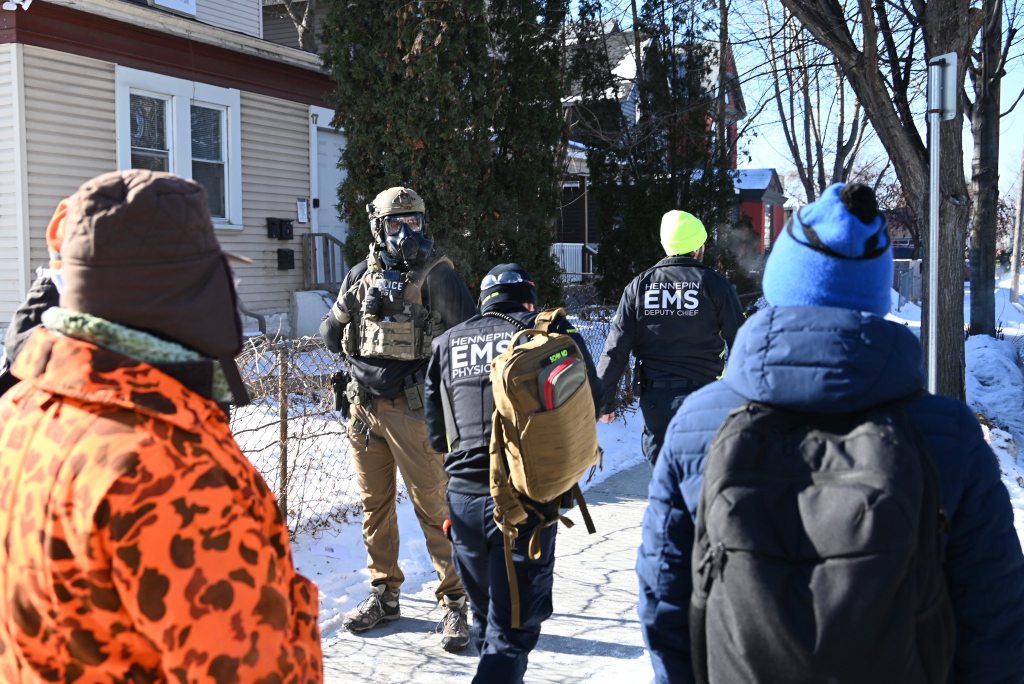
According to court filings, federal agents shot and killed Pretti around 9 a.m. near the intersection of East 26th Street and Nicollet Avenue. The area quickly filled with protesters, tear gas residue, flash-bang canisters and police tape.
The Minnesota Bureau of Criminal Apprehension (BCA), which investigates officer-involved shootings statewide, arrived within about 30 minutes and attempted to follow standard protocol: securing the scene, photographing evidence, collecting physical items and identifying witnesses.
State officials say federal agents refused to allow BCA access — even after investigators obtained a search warrant later that morning.
“In my 20-plus years at the BCA, prior to 2026, I had never encountered a situation in which federal authorities blocked BCA access to an incident where there is concurrent federal and state jurisdiction,” BCA Superintendent Drew Evans said in sworn filings.
Minnesota investigators sought evidence including Pretti’s phone, clothing, firearms, bullets, blood and hair samples, as well as the identities and statements of federal agents involved in the shooting.
Judge orders evidence preserved — for now
Late the night of the shooting, U.S. District Judge Eric Tostrud issued a temporary restraining order barring federal agents from destroying or altering evidence. The court is now weighing whether to extend that order while the underlying lawsuit proceeds.
Federal officials argue they are properly preserving evidence at the FBI’s Minneapolis field office and are not legally required to share it with state authorities while a federal investigation is underway.
But Minnesota attorneys say the refusal to allow state access represents a “massive departure” from longstanding norms of cooperation between state and federal law enforcement.
Pattern of conflict in recent federal shootings
The dispute over Pretti’s death follows similar clashes involving two earlier shootings this month — the killing of Renee Good and the wounding of Julio Cesar Sosa-Celis — where Minnesota officials also say they were denied access to evidence.
“This is unfortunately not our first rodeo with an officer-involved shooting,” said Peter Farrell, an attorney representing the BCA, during a recent court hearing.
Videos contradict federal statements
Public confidence in the federal investigation has been further strained by video evidence that appears to contradict early official statements.
Multiple video analyses by national media outlets, including The New York Times, indicate Pretti was holding a cellphone — not a firearm — when federal agents tackled him, disarmed him and shot him while he was on the ground.
Despite this, the Department of Homeland Security labeled Pretti “violent” within about 90 minutes of his death, claiming he approached officers with a gun and resisted arrest. DHS also suggested Pretti intended to carry out a “massacre” — language Minnesota officials later cited as evidence that federal authorities had prejudged the case.
“The BCA would never put a public statement out into the world like that,” Farrell told the court.
Federal officials, including Deputy U.S. Attorney General Todd Blanche, have dismissed criticism, calling claims of mishandled evidence “bald-faced lies” and blaming protesters for disrupting the scene.
Broader constitutional questions
Minnesota’s lawsuit argues federal officials violated the Tenth Amendment by preventing the state from exercising its traditional police powers to investigate a homicide within its borders.
“Minnesota is a sovereign state that — as a matter of basic federalism — has a constitutional right to investigate a fatal shooting in its largest city,” state attorneys wrote in court filings.
Gov. Tim Walz echoed those concerns, saying the federal government cannot be trusted to investigate its own agents.
“Minnesotans are witnessing, and we’re creating a log of evidence for the future prosecution of ICE agents and officials responsible for this,” Walz said on the day of the shooting.
Public response and next steps
As legal battles unfold, thousands of residents have taken to the streets in peaceful marches and vigils, demanding accountability and urging the public to document federal law enforcement actions.
Minnesota officials have launched online portals for residents to submit photos, videos and other evidence related to Pretti’s death and other federal operations.
The case — Minnesota Bureau of Criminal Apprehension et al. v. Noem et al. — is expected to move quickly, with implications that could extend far beyond Minnesota as states nationwide grapple with federal law enforcement accountability.
 Texas Reporter