
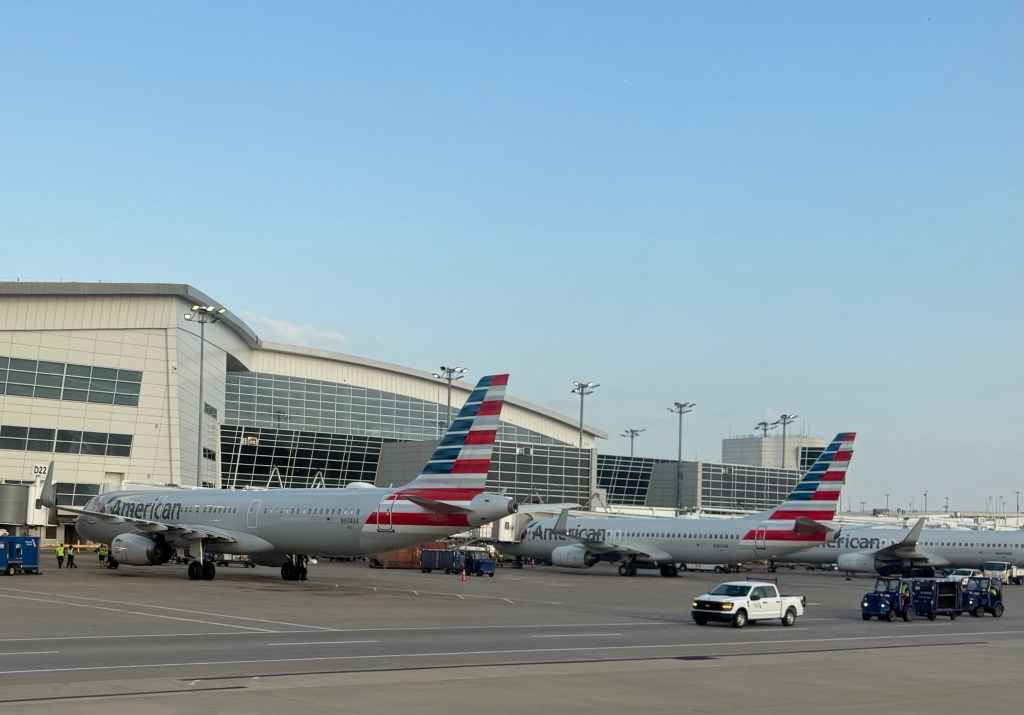
American Airlines has launched a pilot program at Dallas–Fort Worth International Airport (DFW) to hold select departing flights for connecting passengers, marking a shift in the carrier’s approach to delays and missed connections.
The effort, reported by travel news site View From the Wing, was implemented this week and aims to improve passenger experience by allowing late-arriving travelers to make their connections—so long as doing so does not cause broader operational disruptions.
American’s internal guidance outlines conditions under which flights may be held. These include situations where a flight would still arrive on time even with a short delay, or when the flight is the last of the day and options for stranded passengers are limited. Scenarios with many connecting passengers and minimal impact on crew schedules or downstream delays are also prioritized.
Until now, American gate agents at DFW and elsewhere have had limited discretion. Typically, they could only delay closing the aircraft door by a few minutes—mainly if the passenger was in sight or if the flight was the final departure of the day. Otherwise, the airline’s focus on strict on-time departures (known as D0) has discouraged such holds, even when passengers were just minutes away from making it onboard.
This new program mirrors elements of United Airlines’ ConnectionSaver tool, which uses predictive modeling to determine when to briefly hold flights to assist connecting passengers. According to United, that system has held flights for over 2,000 passengers in a single day.
American’s move comes as the airline begins making incremental improvements to the customer experience. Recent announcements include offering free Wi-Fi on most aircraft starting next year and ending the early collection of premium cabin headphones before landing. The carrier is also preparing to debut its new business class product and a redesigned lounge in Philadelphia.
Based in Fort Worth, American Airlines is one of the largest carriers operating out of DFW and plays a central role in connecting domestic and international travelers through the hub. If the connection-saving trial proves effective, the airline is expected to expand the program to other airports in its network.
 Texas Reporter