
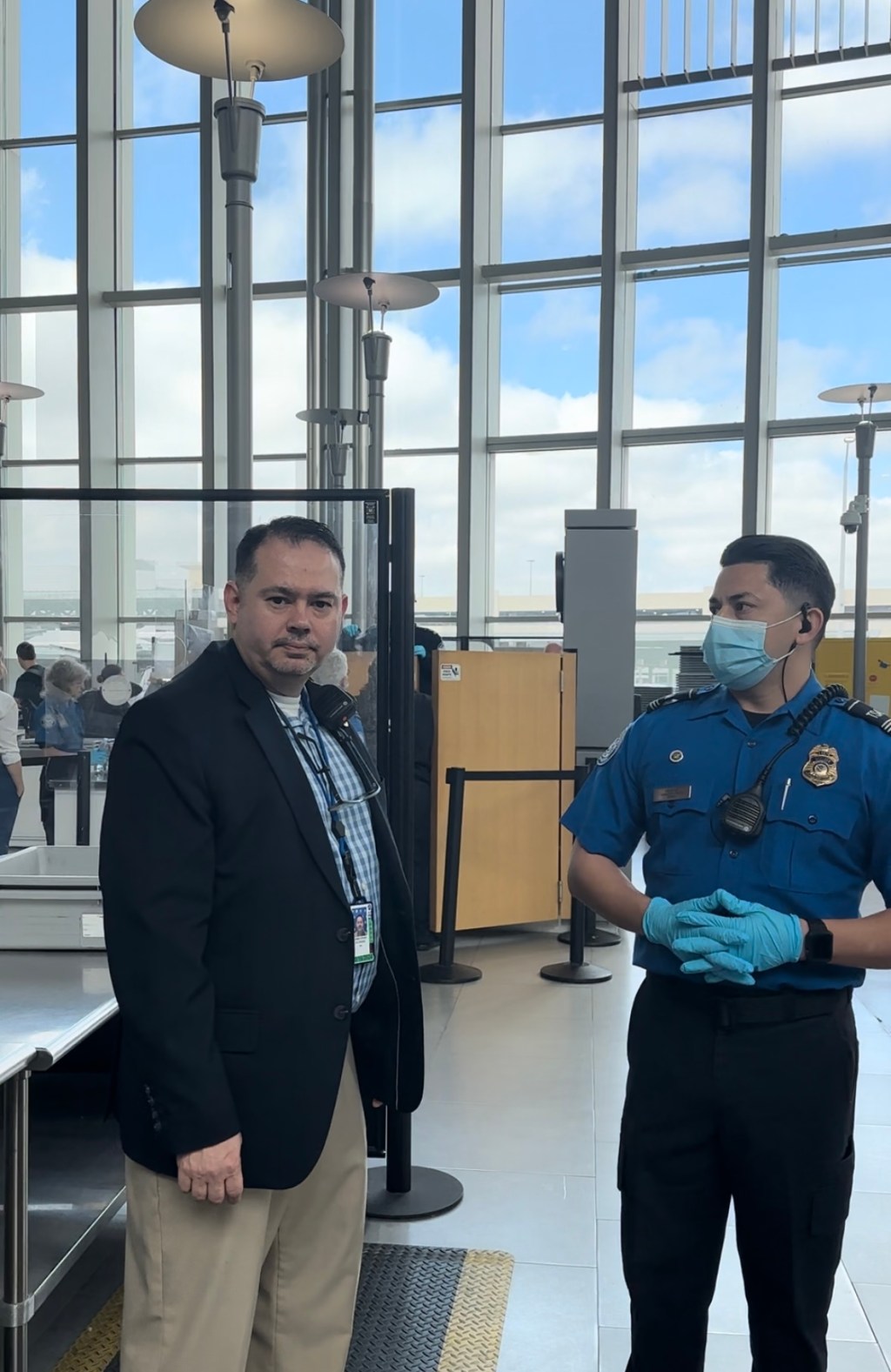
Texas Reporter Photo: Austin TSA Employees Michael “Mike” Martinez and Chris Alvarado
In a disturbing incident at Austin Bergstrom International Airport, a local executive’s attempt at a straightforward TSA screening turned into a nightmare, revealing a deep-seated culture of escalation and a disturbing lack of empathy within TSA ranks. This saga began with the executive, aiming for efficiency, removing their jeans to prevent them from falling after a belt removal request—a decision that was practical but tragically misinterpreted.


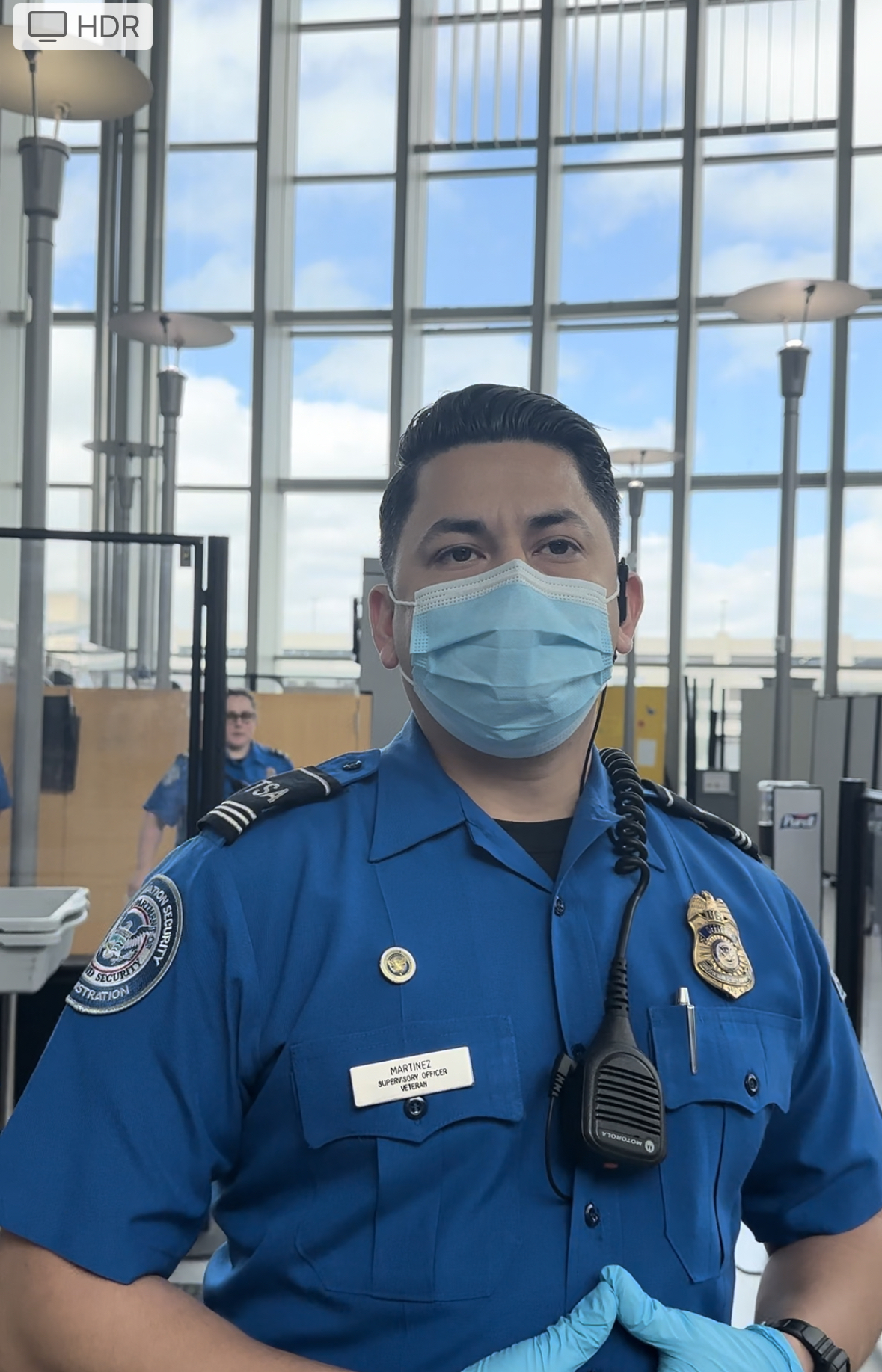
Agents Michael “Mike” Mike Martinez and Maria Rova, alongside Duty Manager Chris Alvarado, became central figures in an unfolding drama that highlighted not just individual misjudgments but a systemic issue within the TSA. The executive’s clear, non-protest act, aimed solely at facilitating the screening process, was misconstrued as public stripping. This accusation, far from being an isolated misunderstanding, was a spark that ignited a series of overreactions.
The executive’s decision was not premeditated but a spontaneous act of practicality, aiming to streamline the screening process. It’s worth noting that their choice to remove the jeans, revealing workout shorts underneath, was based on convenience and efficiency, rather than any form of protest. This distinction is critical, especially in light of historical instances where individuals have stripped at TSA checkpoints as a form of protest—a protected activity under certain legal precedents. Yet, this scenario was markedly different from those acts of civil disobedience.
Legal decisions have indeed recognized the right to protest in various forms at TSA checkpoints. For example, instances where individuals have removed clothing to reveal messages protesting security procedures have been protected under free speech rights. However, the executive’s actions were far from a calculated demonstration or an attempt to challenge or disrupt the screening process.
The executive repeatedly expressed that he was trying to cooperate and get on with his travels. These were met with accusations that were argumentative and repetitive in nature. While a great deal of time was spent “off script” attempting to speak non-existent “uncooperative” acts into reality, far too little time was spent following TSA security protocols for screenings.

Alvarado’s failure to explain the normal public screening procedures and the executive’s rights in opting for a private screening was a glaring omission. This lack of communication was compounded when the executive, signaling the sensitive nature of the pat-down area, was met not with understanding but with a stark threat from Martinez of law enforcement intervention, a clear deviation from TSA’s guidelines for handling sensitive areas with minimal pressure.
The situation escalated further when the executive expressed their intent to file a complaint. Shawn Brooks, in response, not only physically assaulted the executive but also followed them to their gate, continuing the harassment. Brooks’ use of profanity and refusal to identify himself, along with the unidentified manager’s patronizing remark calling the executive “smiley,” underscores a disturbing trend. The executive’s efforts to deescalate the situation, documented meticulously to protect against spurious allegations, were met with continued aggression and unprofessionalism.
This encounter, marked by Rova and Alvarado’s disregard for procedural clarity and Brooks’ outright hostility, points to a troubling TSA culture. The executive’s ordeal underlines the necessity for a profound cultural shift within the TSA, one that prioritizes clear communication, empathy, and respect for passengers’ rights and dignity. The TSA’s mission to ensure airport security must not come at the cost of humiliating or escalating encounters with travelers, particularly those who, like the executive, approach the screening process with the intent to comply and cooperate fully.
The narrative of this harrowing encounter calls for immediate action to reevaluate TSA training, emphasize the importance of deescalation techniques, and instill a culture of respect and professionalism. The executive’s experience is a stark reminder of the work that remains to be done to align TSA procedures with the principles of dignity and respect that should underpin all interactions in the sensitive environment of airport security.
 Texas Reporter