
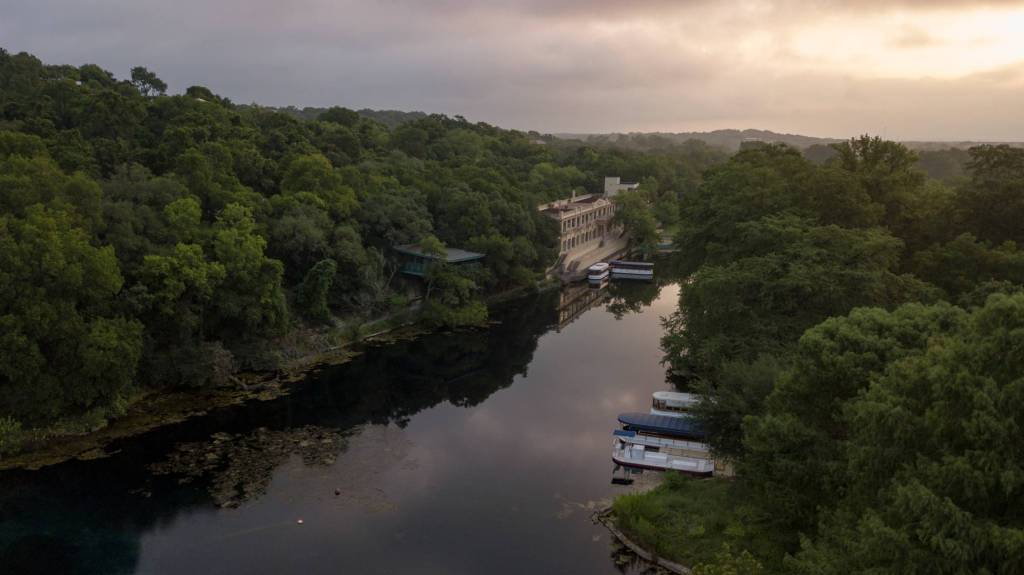
A groundbreaking study from The Meadows Center for Water and the Environment at Texas State University reveals a concerning trend in Texas’ natural water resources. The research, led by Robert E. Mace, Ph.D., Meadows Center Executive Director, and Nohemi Galaviz, an undergraduate research assistant, has found a significant increase in the number of dry springs across the state, with findings suggesting the situation has nearly tripled since the 1980s.
Building on the foundational work of Gunnar Brune, Texas’ renowned springs expert, the study revisited the status of major and historical springs cataloged in Brune’s 1975 report and his 1981 book. “For the first time in nearly half a century, we looked at the status of major and historical springs across the state to see if more springs had gone dry. Indeed, more—many more—have failed over the past 50 years,” Mace articulated, emphasizing the gravity of the findings.
Utilizing methods such as satellite imagery, historical maps, and fieldwork, the study identified a staggering 173% increase in dry springs since 1981, with 30% of the springs examined now found to be dry. This sharp rise from 11% underscores the pressing issues surrounding groundwater resources in Texas.
The study also expanded on Brune’s original research by incorporating additional data points through a fractal analysis method. This innovative approach has led to the estimation that Texas may have over 4,000 springs with flows of 0.01 cubic feet per second or larger. However, the total springflow in the state is estimated at 2.1 million acre-feet per year, a notable decrease from Brune’s 1975 speculative estimate of 3 million acre-feet per year.
Mace highlighted the broader implications of these findings, stating, “The data speaks volumes about the growing demands on our groundwater resources and some of the consequences of meeting those demands.” He further warned of the jeopardy facing not only Texas’ groundwater and surface-water supplies but also the ecosystems dependent on these spring systems.
As Texas grapples with the realities of these environmental challenges, the report serves as a crucial resource for understanding the current state of its water resources. The Meadows Center has made this database and report accessible on their website, providing an updatable research tool for the community. To delve into the details of this significant study, visit The Meadows Center for Water and the Environment website.
Image Credit: https://news.txst.edu/research-and-innovation/2024/research-shows-increase-in-texas-dry-springs.html
 Texas Reporter